Biology

100+ Human Body Parts Name with Functions: Free PDF Guide for Kids

R
Virat
Updated: Aug 12, 2026
32 MIN READ
Understanding the human body is a fundamental part of childhood development. This guide covers over 100 human body parts names and their specific functions. You can also download our comprehensive body parts name PDF for free, complete with detailed illustrations of both male and female anatomy.

Human Body Parts Names: As children grow, they become naturally curious about their bodies and how they function. While most kids are familiar with basic anatomy like the head, shoulders, knees, and toes, learning the names of more specific parts is an essential step in their cognitive development. Ready to explore the complexities of human anatomy? From major systems to minor components, discover the full list of human body parts in this guide.

Body Parts Name

Once your child has a basic grasp of their external features, it is the perfect time to teach them the formal names of body parts in English. A typical human body is a biological marvel, consisting of roughly 30 to 40 trillion cells, with approximately 242 billion new cells generated daily. These cells organize into tissues, forming the building blocks of our physical form.

Tissues further develop into organs, which then coordinate to create complex organ systems and, ultimately, the human organism. This article provides a structured list of body parts along with their primary functions. Our goal is to help children expand their vocabulary and gain a deeper, more scientific understanding of how their bodies work.

Learn: All Fingers Names in English & Hindi with Pictures

Parts of Body Name

The human body consists of various organs that function in perfect coordination to maintain health and sustain life. These organs are organized into systems that enable us to perform daily activities. Anatomically, body parts are generally categorized into three groups: the torso, extremities, and internal organs. Explore these categories in detail below.

Learn more: All Colours Names in English & Hindi

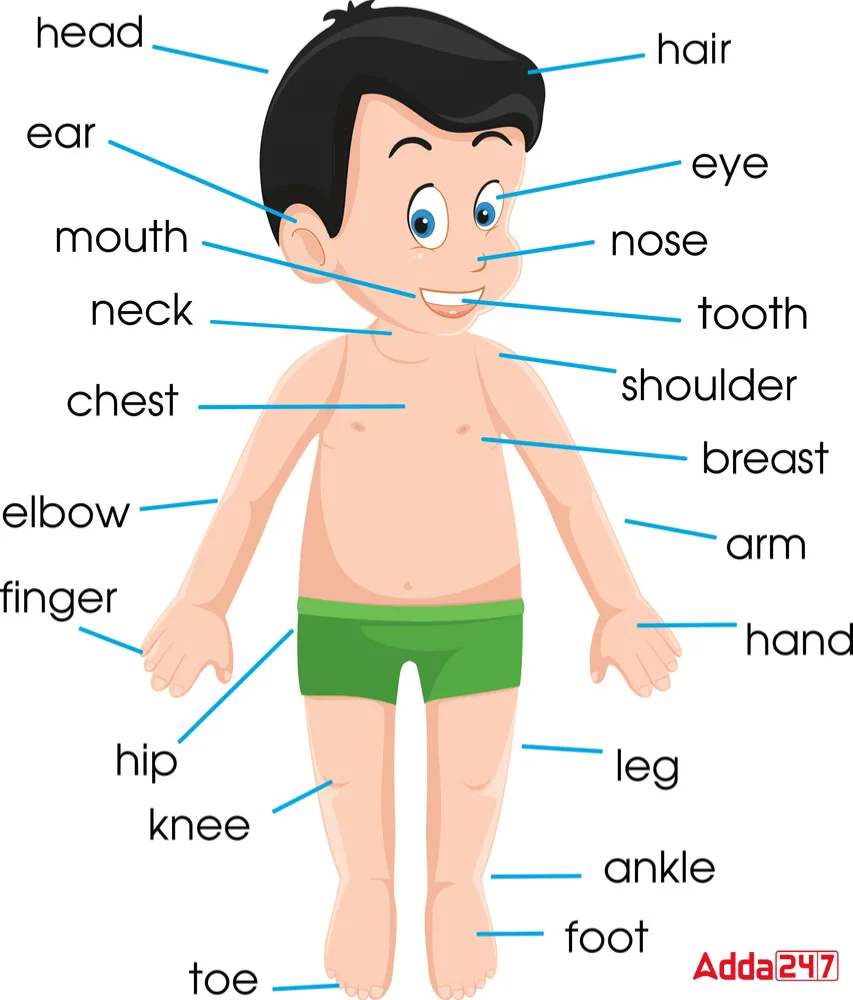
Human Body Parts Name With Picture

In this article, we will explore the major human body parts and the essential functions they perform each day.

Anatomy Chart Showing Human Body Parts

Comprehensive anatomy chart illustrating various human body parts.

Read: 100 Vegetable Names in English & Hindi 

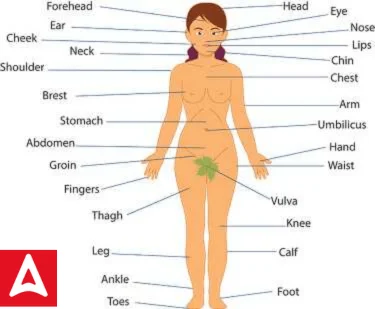
Human Body Parts Name Female with Picture

While male and female anatomies are fundamentally similar, there are key biological differences. We have provided an illustration below to help students easily understand these distinctions in a clear, educational format.

Educational Diagram of Female Anatomy

All Body Parts Name in English: बॉडी पार्ट्स नेम in Hindi

We have curated a comprehensive list of essential body parts that every student should be familiar with.

Names of Body Parts Chart
1. Hair – बाल – [Baal]
2. Eyes – आंखें – [Aankhen]
3. Mouth – मुंह – [Munh]
4. Arm – बांह, भुजा – [ Baanh , Bhujaa]
5. Tooth, Teeth – दांत – [Daant]
6. Back, Waist – कमर, पीठ – [Kamar , Peeth]
7. Shoulder – कन्धा – [Kandha]
8. Stomach – पेट – [Pet]
9. Knee – घुटना – [Ghutana]
10. Throat – गला – [Gala]
11. Leg – टांग – [Taang]
12. Hand – हाथ – [Haath]
13. Nose – नाक – [Naak]
14. Ear – कान – [Kaan]
15. Eye – आंख – [Aankh]
16. Foot – पैर – [Pair]
17. Head – सिर – [Sir]
18. Face – चेहरा – [Cheharaa]
19. Smiley Face – हंसमुख – [Hansmukh]
20. Neck – गरदन – [Gardan]
21. Beard – दाढ़ी – [Daadhi]
22. Moustache – मूंछ – [Munchh]
23. Hip – कूल्हा – [Koolhaa]
24. Nail – नाखून – [Naakhoon]
25. Skin – त्वचा, खाल – [Twacha , Khaal]
26. Fist – मुठ्ठी – [Muthhee]
27. Lip – होंठ – [Honth]
28. Blood – रक्त – [Rakt]
29. Brow – भौंह – [Bhaunh]
30. Breast – स्तन – [Stan]
31. Elbow – कोहनी – [Kohanee]
32. Nipple – स्तन का अगला भाग
33. Navel – नाभि – [Naabhi]
34. Armpit, Womb – बगल, कांख – [Bagal , Kaankh]
35. Chin – ठुड्डी – [Thuddee]
36. Forehead – माथा – [Maathaa]
37. Cheek – गाल – [Gaal]
38. Ankle – टखना – [Takhanaa]
39. Brain – दिमाग – [Dimaag]
40. Face – चेहरा – [Cheharaa]
41. Eyebrow – भौं – [Bhaun]
42. Eyelid – पलक – [Palak]
43. Tongue – जीभ – [Jeebh]
44. Heart – ह्रदय – [Harday]
45. Toe – पैर की उंगली – [Pair Ki Ungalee]
46. Body – शरीर – [Shareer]
47. Fingers – अंगुलियाँ – [Unguliyaan]
48. Thumb – अंगूठा – [Angootha]
49. Intestine – आंत – [Aant]
50. Heel – एढ़ी – [Aidhee]
51. Larynx – कंठ – [Kanthh]
52. Temple – कनपटी – [Kanpati]
53. Wrist – कलाई – [Kalai]
54. Skull – खोपड़ी – [Khopadee]
55. Kidney – गुर्दा – [Gurdaa]
56. Knee – घुटना – [Ghutana]
57. Chest – छाती – [Chhatee]
58. Jaw – जबड़ा – [Jabadaa]
59. Thigh – जाँघ – [Jhaangh]
60. Liver – जिगर – [Jigar]
61. Joint – जोड़ – [Jod]
62. Nostril – नथुना – [Nathoonaaa]
63. Nerve, Vein – नस – [Nas]
64. Paw – पंजा – [Panjaa]
65. Rib – पसली – [Pasalee]
66. Lung – फेफड़ा – [Fefadaa]
67. Muscles – माँसपेशी – [Maaspeshee]
68. Spine – रीढ़ – [Reedhh]
69. Bone – हड्डी – [Haddee]
70. Palm – हथेली – [Hatheli]
71. Belly – पेट – [Pet]
72. Calf – पिंडली – [Pindalee]
76. Uterus – गर्भाशय [Garbhashya]
78. Rump – चुतड [Chutad]
79. Bun – बालों का जूडा [Balon ka Jooda]
80. Index Finger – तर्जनी [Tarjani]
81. Palate – तालु [Taalu]
82. Snout – थूथना [Thuthana]
83. Molar Theeth – दाढ़ [Daadh]
84. Artery – धमनी [Dhamani]
85. Pulse – नाड़ी [Naadi]
86. Spleen – तिल्ली [Tilli]
87. Bile – पित्त [Pitt]
88. Eyeball – नेत्रगोलक, आँख की पुतली [ Netragolak]
89. Eyelash – बरौनी [Barounee]
92. Embryo – भ्रूण [bhoorn]
93. Middle-Finger – बीच की ऊँगली [beech ki Unagli]
94. Urinary Bladder – मूत्राशय [Mootrashay]
95. Saliva – लार [Laar]
96. Trachea – स्वास नली, कंठनाल [Swas nali]

Human Body Parts Name from A to Z

Students often find it easier to memorize new vocabulary when organized alphabetically. To facilitate faster learning and retention, we have compiled an A-Z list of human body parts in the table below.

Letter Body-Related Terms
A Ankle, Armpit, Abdomen, Anus, Artery, Abs, Alleles
B Belly, Bone, Body, Brain, Back, Buttock, Beard, Bile, Breasts
C Chest, Cheek, Chin, Claw, Chignon, Calf, Cranium, Cortex, Chromosomes
D Dimple, Dandruff, DNA
E Ear, Eye, Elbow, Eyebrow
F Face, Finger, Foot, Fist, Flesh, Forehead, Finger nails
G Gland, Gum, Gall bladder, Groin, Gametes
H Head, Hand, Heart, Hair, Heel
I Intestine, Incisors, Iris
J Jaw, Joint, Jugular
K Kidney, Knee, Knuckle
L Leg, Liver, Lungs, Lips
M Mouth, Moustache, Muscle
N Nose, Navel, Neck, Nerve, Nipple, Nails
O Ovary, Ovum, Overbite
P Palm, Palate, Pulse, Phlegm, Penis, Pus
Q Queen, Quadriceps
R Ribs, Ring finger, Rectum
S Skin, Shoulder, Stomach, Spleen, Skull, Snout, Stool, Sweat, Sole, Saliva
T Tooth, Tongue, Thigh, Throat, Toes
U Urine, Uterus, Urethra, Under bite
V Voice, Vein, Vagina, Vox, Vertebra, Vertex
W Waist, Wrist, Wart, Womb
X Xantho
Y Yoke
Z Zygote

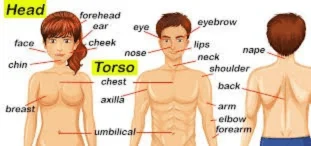
The Torso Body Parts Name

The central section of the human body is known as the torso, or trunk. This region extends from the neck down to the pelvis and encompasses vital structures, including the chest, ribs, abdomen, waist, and spine.

Diagram Showing the Human Torso

The torso serves as the structural foundation of the body, maintaining posture and stability. Furthermore, it acts as a protective shield for essential internal organs, such as the heart, lungs, and liver, ensuring they remain safe and functional.

Read: All Months Names List in English

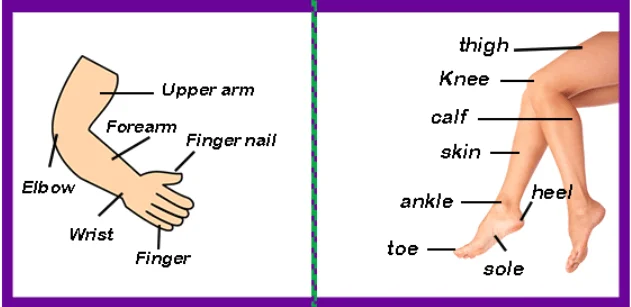
The Extremities Body Part Name

The arms and legs of the human body are referred to as extremities. The upper limbs (arms) consist of shoulders, elbows, wrists, palms, and fingers, while the lower limbs (legs) include thighs, knees, calves, and feet. Extremities are vital for movement and interaction: arms facilitate tasks like eating and carrying objects, while legs provide stability and mobility, enabling locomotion from one place to another.

Human Extremities Overview

Learn: All Fingers Names in English & Hindi with Pictures

Internal Organs Body Parts Name

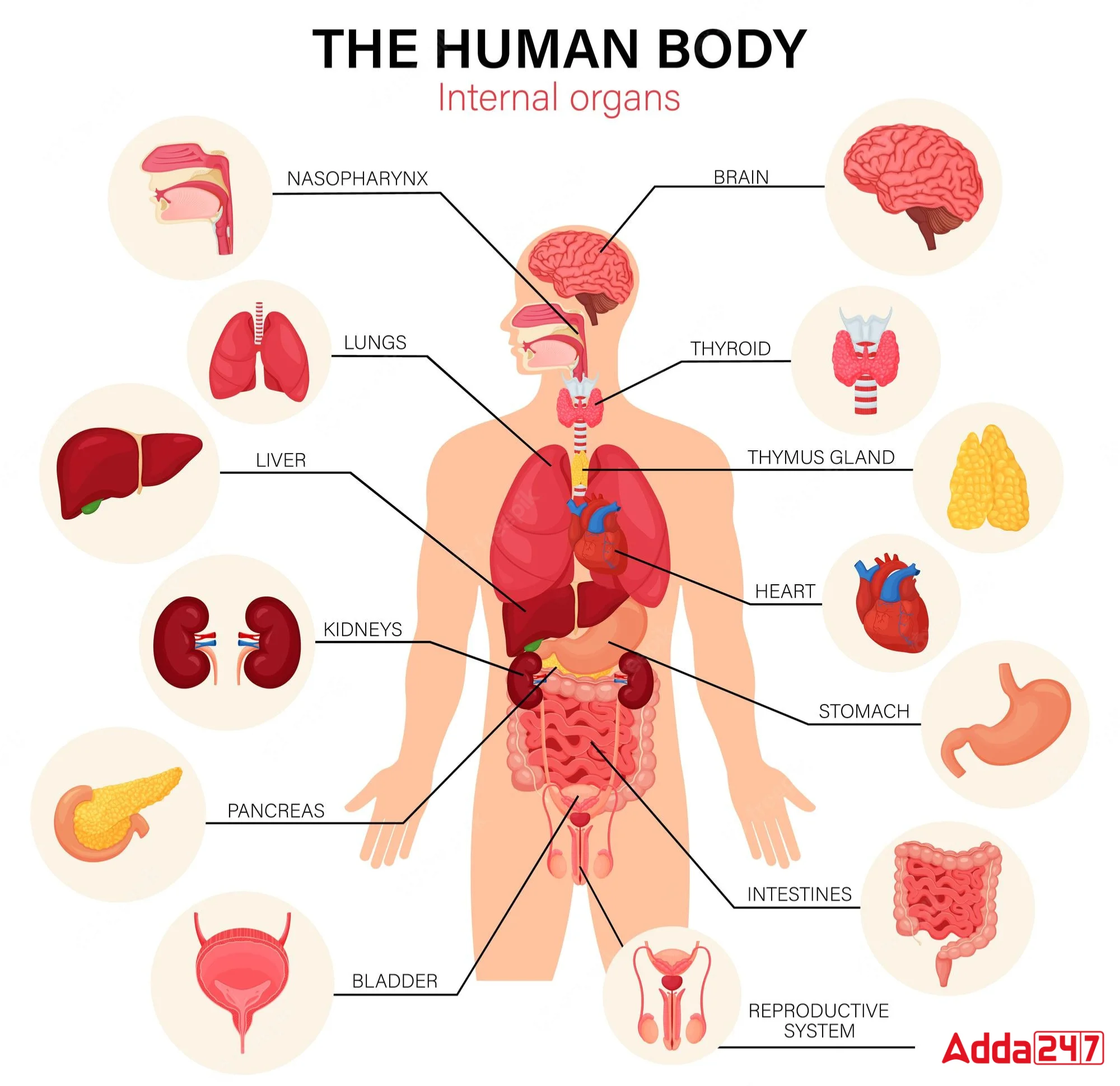
Beyond the body parts visible on the surface, the human body houses critical internal organs that perform life-sustaining tasks. Located within the body cavities, these organs include the heart, brain, liver, lungs, kidneys, and stomach. Let’s examine the vital roles these internal structures play in keeping us healthy.

Read: Days Names in English and Hindi

Internal Organs of the Human Body

Human Body Parts and their Functions

Liver: As the body’s largest solid organ, the liver performs hundreds of essential tasks, including filtering blood, regulating blood sugar, assisting in clotting, and processing nutrients. It is located in the upper-right quadrant of the abdomen.

Kidneys: Humans have two bean-shaped kidneys that are vital for survival. Their primary functions include filtering waste from the blood and producing urine to maintain a healthy internal balance.

Heart: Positioned within the ribcage, the heart acts as a tireless pump, circulating blood throughout the entire body from birth. It is a vital organ whose rhythmic beating is often audible to children.

Brain: The body’s command center, the brain, controls every voluntary and involuntary function, from complex problem-solving and memory storage to simple motor coordination.

Stomach: This muscular pouch plays a crucial role in digestion by using gastric acids and enzymes to break down food. Internal structures, including the lining and sphincters, ensure that nutrients are properly prepared for absorption.

Intestines: Comprising the small and large intestines, this system is responsible for nutrient absorption and waste management. Microscopic structures like villi maximize surface area for intake, while the colon focuses on water reclamation and stool formation.

Pancreas: The pancreas is a dual-purpose gland essential to the digestive and endocrine systems. It secretes enzymes for digestion and hormones like insulin to regulate blood sugar levels, effectively converting food into cellular energy.

Lungs: The primary organs of the respiratory system, lungs allow for gas exchange—absorbing oxygen and expelling carbon dioxide. Specialized structures like alveoli, bronchi, and the diaphragm work together to facilitate effective, continuous breathing.

Read: 50 Dry Fruits Names in English & Hindi with Images

50 Body Parts Name

Below is a list of 50 common human body parts from head to toe:

  1. Head
  2. Hair
  3. Forehead
  4. Eyebrow
  5. Eyelash
  6. Eye
  7. Ear
  8. Nose
  9. Cheek
  10. Mouth
  11. Lip
  12. Tongue
  13. Tooth (plural: teeth)
  14. Chin
  15. Neck
  16. Shoulder
  17. Arm
  18. Elbow
  19. Forearm
  20. Wrist
  21. Hand
  22. Finger
  23. Thumb
  24. Chest
  25. Breast
  26. Rib
  27. Abdomen
  28. Navel (belly button)
  29. Hip
  30. Waist
  31. Buttocks
  32. Leg
  33. Thigh
  34. Knee
  35. Calf
  36. Ankle
  37. Foot
  38. Heel
  39. Toe
  40. Sole
  41. Back
  42. Spine
  43. Nape
  44. Waistline
  45. Hips
  46. Pelvis
  47. Shin
  48. Larynx (voice box)
  49. Trachea (windpipe)
  50. Esophagus

While these are some of the most prominent features, the human body is comprised of countless anatomical structures working in concert.

All Human Body Parts Name

Here is an organized list of various human body parts, grouped by their general location:

Human Body Parts Name Human Body Parts Name
Head
  • Skull: Protects the brain
  • Brain: Control center of the body
  • Eyes: Vision
  • Ears: Hearing and balance
  • Nose: Smell
  • Mouth: Eating, speaking
  • Teeth: Chewing
  • Tongue: Taste, speech
  • Face: Includes forehead, cheeks, and chin
Neck and Throat
  • Trachea: Air passage to the lungs
  • Esophagus: Food passage to the stomach
  • Larynx: Voice box
Torso
  • Chest: Includes sternum and ribs
  • Abdomen: Houses digestive organs
  • Back: Includes vertebral column
Upper Limbs
  • Shoulder: Includes clavicle (collarbone)
  • Arm: Includes upper arm, forearm
  • Elbow: Joint connecting upper arm and forearm
  • Wrist: Joint connecting forearm and hand
  • Hand: Includes palm, fingers (digits)
Lower Limbs
  • Hip: Connects torso to legs
  • Thigh: Upper part of the leg
  • Knee: Joint connecting thigh and lower leg
  • Calf: Back part of the lower leg
  • Ankle: Joint connecting leg and foot
  • Foot: Includes heel, arch, toes
Internal Organs
  • Heart: Pumps blood
  • Lungs: Breathing
  • Liver: Detoxification
  • Kidneys: Filtration of blood
  • Stomach: Digestion
  • Intestines: Absorption of nutrients
Additional Structures
  • Skin: Largest organ, covers and protects the body
  • Blood vessels: Include arteries, veins, capillaries
These All are the full body parts name present in Human Body.

All Parts of Human Body with Details

A high-level overview of the major human body parts and their functions, categorized by system for educational clarity:

Skeletal System
Skull – Protects the brain and supports facial structure.
Spine/Vertebral Column – A flexible column protecting the spinal cord and providing structural support.
Ribs – Protects the heart and lungs, forming the thoracic cage.
Pelvis – Supports upper body weight and connects lower limbs.
Bones (206 total) – Provide structure, allow movement, and create blood cells. Key examples:
Femur (Thighbone) – The body’s longest and strongest bone.
Humerus – Upper arm bone.
Tibia – The larger lower leg bone.
Muscular System
Biceps – Upper arm muscles for lifting the forearm.
Triceps – Back of the upper arm; aids in straightening the limb.
Quadriceps – Front thigh muscles essential for walking, running, and jumping.
Hamstrings – Back of the thigh; helps in knee flexion.
Deltoid – Shoulder muscle enabling arm rotation and lifting.
Nervous System
Brain – The control center for cognition, sensation, and movement.
Spinal Cord – Transmits signals between the brain and body.
Nerves – Fiber networks transmitting electrical signals.
Neurons – Specialized cells conducting nerve impulses.
Circulatory System
Heart – Pumps blood carrying oxygen and nutrients.
Blood Vessels (Arteries, Veins, Capillaries) – The transport network for blood.
Aorta – The primary artery distributing oxygen-rich blood.
Vena Cava – The primary vein returning oxygen-depleted blood to the heart.
Blood – Composed of red blood cells (oxygen), white blood cells (immunity), platelets (clotting), and plasma.
Respiratory System
Lungs – Primary organs for gas exchange.
Trachea (Windpipe) – Airway connecting throat to lungs.
Diaphragm – Respiratory muscle that regulates lung volume.
Bronchi – Large tubes directing air into the lungs.
Digestive System
Mouth – Initiates digestion via chewing and saliva.
Esophagus – Transports food to the stomach.
Stomach – Secretes acids for food breakdown.
Small Intestine – Primary site of nutrient absorption.
Large Intestine (Colon) – Absorbs water and forms solid waste.
Liver – Produces bile, detoxifies chemicals, and metabolizes drugs.
Pancreas – Produces insulin and digestive enzymes.
Gallbladder – Stores bile.
Urinary System
Kidneys – Filters blood and produces urine.
Ureters – Tubes carrying urine to the bladder.
Bladder – Urine storage.
Urethra – Channel for urine excretion.
Endocrine System
Pituitary Gland – Master gland regulating growth and other endocrine glands.
Thyroid Gland – Manages metabolism and energy levels.
Adrenal Glands – Produces stress-management hormones (adrenaline/cortisol).
Pancreas – Regulates blood sugar via insulin.
Reproductive System
Male: Testes (sperm/testosterone production), Penis.
Female: Ovaries (eggs/hormone production), Uterus (fetal development), Vagina.
Integumentary System (Skin)
Skin – The largest organ; provides protection, temperature regulation, and sensory perception.
Epidermis – Outer skin layer.
Dermis – Contains hair follicles, glands, and vessels.
Hypodermis – Subcutaneous fatty tissue.
Lymphatic/Immune System
Lymph Nodes – Filter lymph and combat infection.
Spleen – Filters blood and recycles old red blood cells.
Thymus – Produces T-cells for immune defense.
Sensory Organs
Eyes – Visual processing.
Ears – Auditory and balance functions.
Nose – Olfactory sensing and breathing.
Tongue – Taste and speech.
Skin – Tactile sensing (touch, pressure, temperature).

Body Parts Name PDF

We have provided a printable PDF version of this body parts list so students can easily study offline.

Download PDF: Body Parts Names in English and Hindi

How to Memorize Body Parts Name

As children grow, their curiosity about their bodies, senses, and physical functions naturally increases. It is important to introduce them to basic terminology, such as the head, shoulders, knees, and toes, before expanding to more detailed anatomical systems and functions. Explore these engaging learning methods to help your child master these names.

  • Use Songs and Rhymes
  • Interactive Games and Activities
  • Drawing Activities
  • Use Fun and Relatable Comparisons
  • Repetition and Daily Practice
  • Teach Through Play
  • Incorporate Technology
  • Through Storytelling
  • Body Part Puzzles
  • Body Part Posters or Charts
  • Flashcards with Pictures
Related Posts:
Water Animals Name List in English & Hindi 100 Flowers Name in English & Hindi 
100 Vegetable Names in English & Hindi  100 Wild Animal Name in English and Hindi
100 Birds Name in English & Hindi  100 Fruits Name in English and Hindi 
Body Parts Name With Pictures in English & Hindi  All Colours Name in English & Hindi
All Months Name List in English  All countries Name in World in English & Hindi
Days Name in English and Hindi All Pet Animals Names in English & Hindi
All Fingers Name in English & Hindi with pictures 50 Dry fruits Name in English & Hindi with Images
31 shares

FAQs

Share this post

Directory